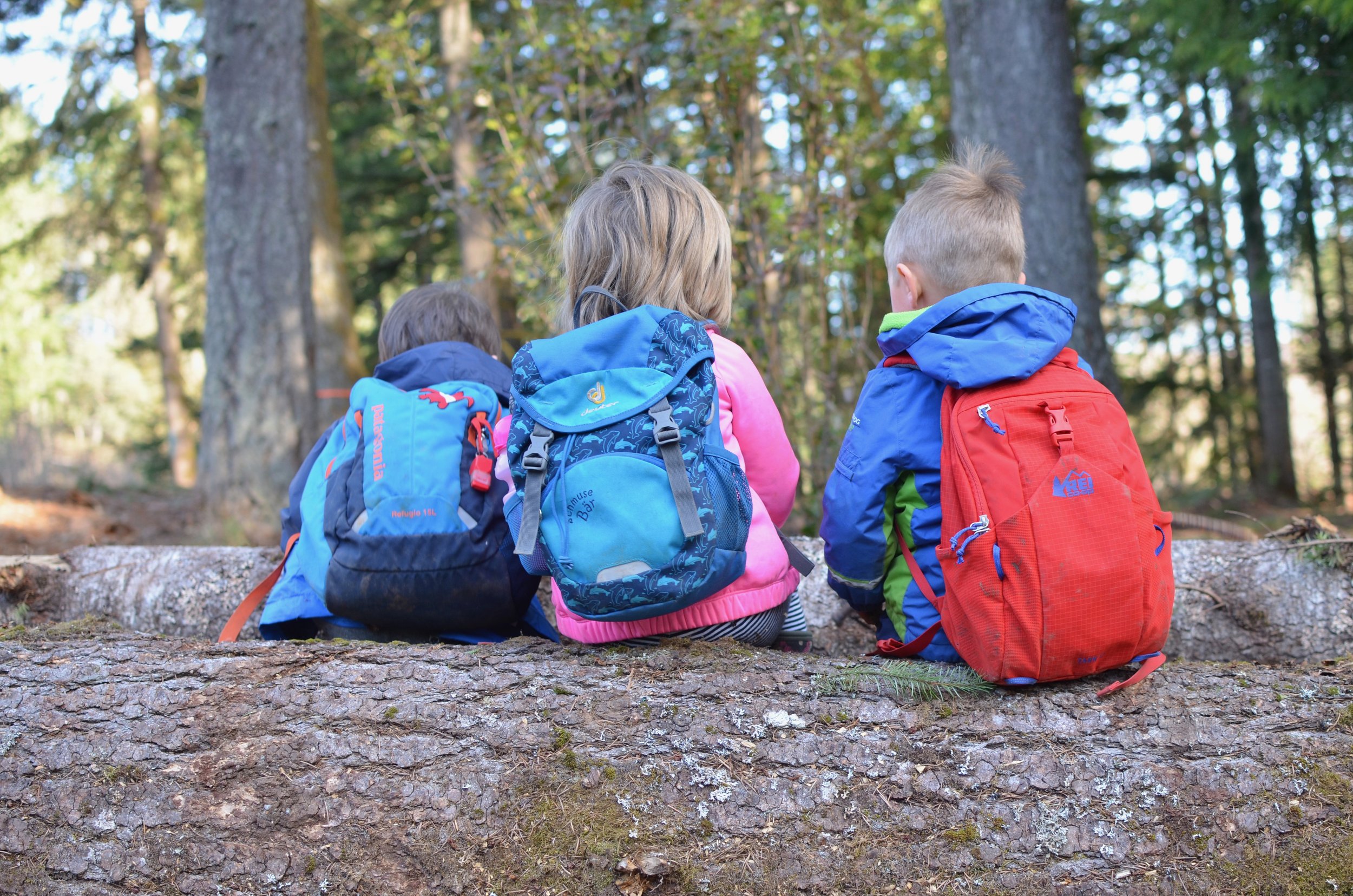
To spend a successful day outdoors at Forest School requires that all children come prepared with suitable clothing and equipment, with their names written on each item. Below you can find layering examples and recommended brands within each category of gear you will need to acquire. When dressing, remember that layers provide the most comfort and flexibility, and generally on a cold or wet day you would dress your child in three layers.
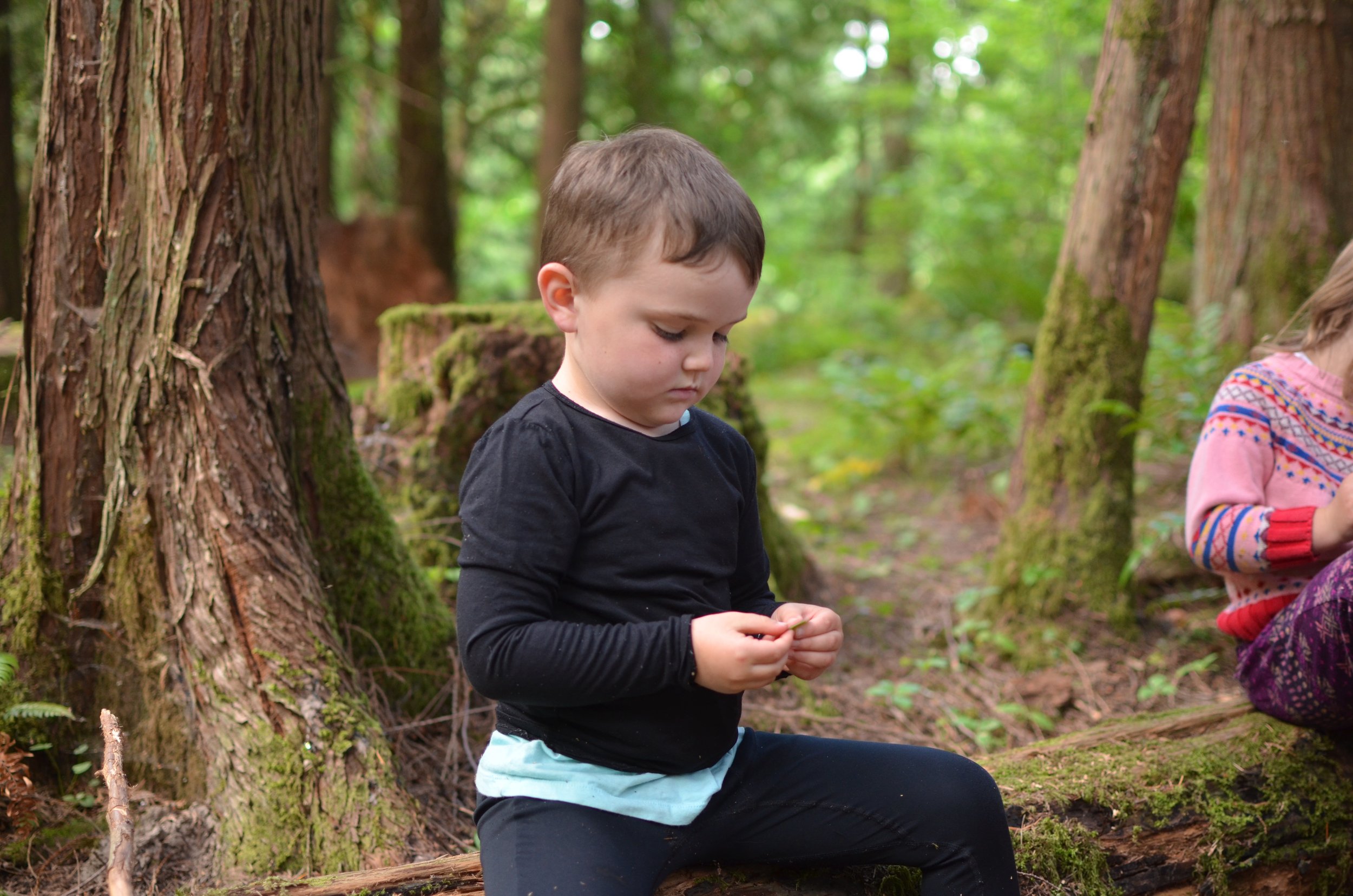
Base Layer
The clothing closest to the skin. A good base layer is snug fitting and helps to keep you warm by absorbing sweat and allowing it to evaporate. This layer should be made of wool, silk, or synthetic material. No cotton.

Mid Layer
The clothing that goes over your base layer and under your outer layer. Fleece jackets and pants and wool sweaters make great mid layers and will keep you warm even when wet. Lightweight down jackets are great for dry days. Depending on the temperature you may wear multiple mid layers. Once more, no cotton.

Outer Layer
The outer layer is your waterproof or water-resistant layer. This includes a coat and pants. This layer is often shed at forest school, but you wouldn't want to be caught outside without it.
Layering Examples:
Tail end of Summer, Autumn, + Spring:
Mild days - almost anything goes. Under 7 years old do best in tennis shoes, sandals not recommended. Be sure to pack an extra set of clothing (lightweight leggings or pants, underwear, and socks) in a ziplock or grocery bag in the backpack. A hoodie, fleece, or lightweight down hoodie might be nice for the morning
Wet days - base layers + rain gear. If it’s cold also, put on a pair of fleece pants and an extra midlayer jacket before the rain gear. Rain boots required
Cold dry days - base layers, mid layers, possibly another set of mid-layers or pack an extra jacket in the backpack, outer layer that does not have to be completely rain proof (such as a heavy down puffer), gloves, hat, wool socks and insulated boots that aren’t too snug. Make sure their toes can spread out in their boots. If the shoes are snug it can restrict bloodflow and make the feet even colder! Pack extra layers and hand warmers.
Winter:
Wet days - base layers, mid layers, sometimes snow pants and snow coat, sometimes rain gear depending on the overall temperature and precipitation type. Wool socks, hat, gloves and insulated waterproof boots.
Cold dry days - base layers, mid layers, possibly another set of mid-layers, outer layer that does not have to be completely rain proof (such as a heavy down puffer), gloves, hat, wool socks and boots that aren’t too snug. Make sure their toes can spread out in their boots. If the shoes are snug it can restrict bloodflow and make the feet even colder! Pack extra layers and hand warmers. If it is windy, rain gear can be nice because it functions as a wind-proof layer.
Something to always keep in mind is that wool and synthetics provide warmth even when wet. If down becomes wet it gets clumpy and loses its insulating ability, however it is warmer than synthentics. Be sure to layer it under a rainproof layer if it’s going to be very wet out. Cotton when wet just makes you more cold, so it’s really only suitable for those mild days when anything goes!
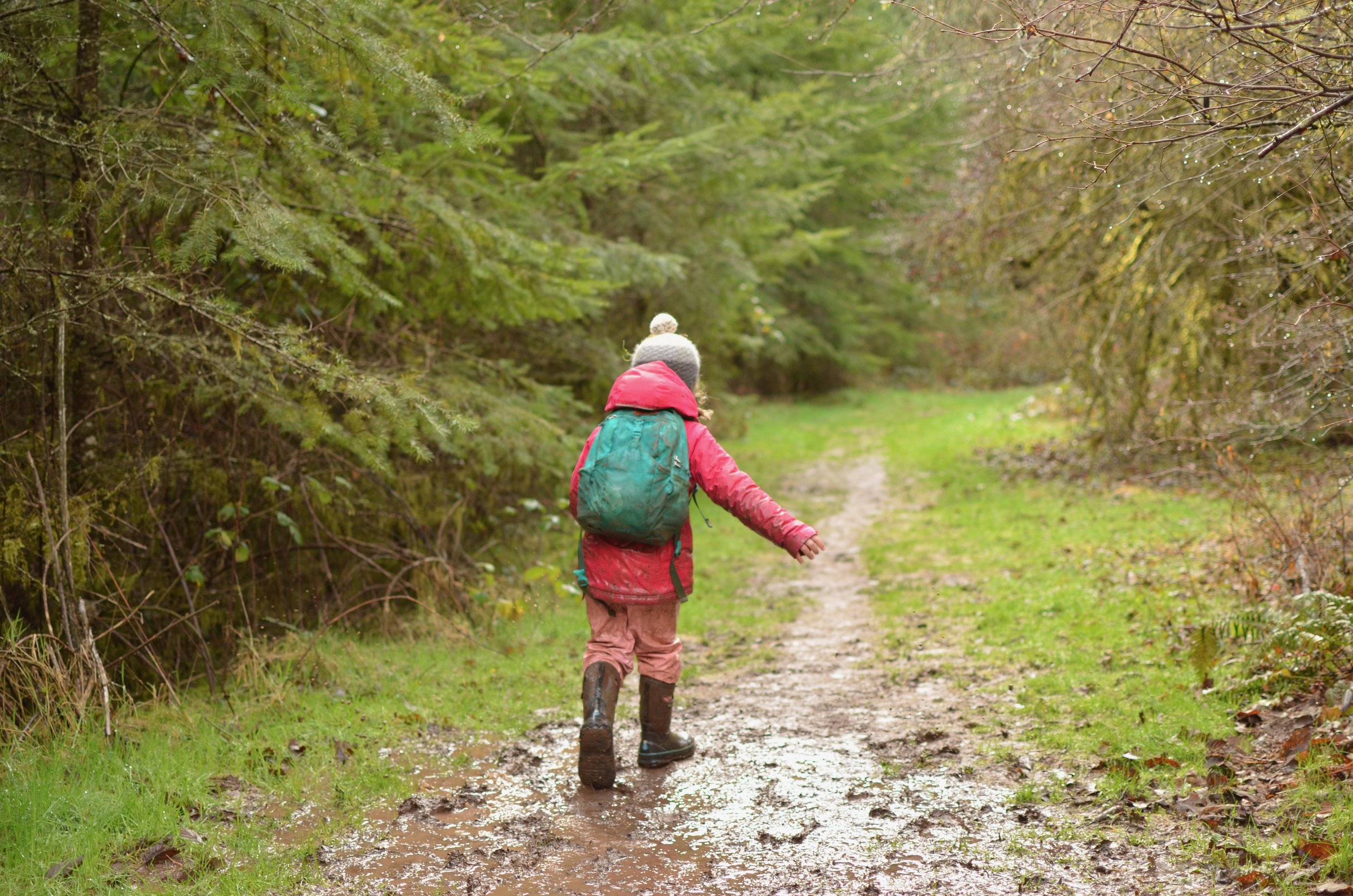
Layering on a damp day in January - base layers, mid layers, water resistant coat and waterproof rain pants, insulated boots, wool socks, wool hat, backpack.
Specific Recommendations
-
You want heavy duty PU rain pants and rain coat. Many families like the one-piece rain suits but they make it extremely difficult for kiddos to use the restroom, so it is not our preference.
Polarn O. Pyret *currently the rain gear we were recommending from this brand has been discontinued.
REI *excellent return policy for members but not currently selling PU rain gear.
Hatley *the prints are fun however the lining in the raincoat is not helpful and the pants can be a bit tight fitting.
Columbia *this PNW classic doesn’t make a PU rain pant currently. The rainpants they sell would be okay for a misty, sprinkling day but will not be adequate for truly rainy days.
Oaki We have heard mixed reviews on this brand from parents. If you like Oaki, you can use our discount code ‘DownToEarth15’ for 15% off your order. We do recieve a small referral commission when you use our code.
-
-
Base layers are critical for forest school. Merino wool is preferred. Silk or polyester if necessary or as a budget friendly pair to keep as backups.
-
100% wool sweater
Fleece pants
Fleece full or half zip jacket
Down sweater (down loses its ability to retain heat when wet. It needs to be under rain gear when it is rainy out.)
Wool sweater pants (for the DIY-er, it’s quite simple to take an old wool sweater from the thrift store and turn it into a pair of leggings. Especially simple for the little ones when the sleeves are just the right length. You can find a tutorial here https://discoverwildlearning.com/affordable-winter-layers-diy-wool-sweater-pants/ )
-
Darn Tough (Darn Tough really stands by their products, guaranteeing them for life.)
*It’s not hard to find other brands of wool socks, however please be sure to check the contents tag. Oftentimes I’ve looked at a pair of socks from an outdoor focused brand only to find that they were entirely synthetic.
-
For cold days (and any days it will be wet) please send your child with a wool or fleece hat. A synthetic knitted hat that is lined with fleece also works, but unlined acrylic knitted hats generally are not warm enough.
-
Gordini side-zip mittens (easily found at the thrift store)
Head side-zip mittens (easily found at the thrift store)
For older kids, costco sells a pair of thin gloves by Head each winter that are great for days that are just moderately cold. They’ll want the thick ski mittens above for truly cold days.
For rain - Reima mittens
-
-
Lunch boxes should not be bulky, kids backpacks are too small. Insulation and ice packs are not necessary, it’s cold enough much of the school year.
A bento-style lunchbox that can fit in the backpack while leaving room for extra clothing is ideal.
Planetbox (The Rover is a favorite among Forest School families)
Lunchbots (Lots of different layout options)
Bentgo (Many families like this one, likely because of the leak-proof sections and lower price, those were the two pros in my experience. Cons- it can be annoying to clean and it’s a whole lot of plastic.)
-
We’ve really been liking the thermos brand funtainer with straw, but the most important thing about the water bottle is that it doesn’t leak and kids can drink from it easily!
Having a thermos of warm tea on cold days can make kids feel more comfortable. Kleen Kanteen Cafe style tumbler or Hydroflask with a sip lid can be stuffed in a backpack and will not spill when sealed.
-
A warm soup or other food in a food jar is the best main dish for winter lunches, warming kids from the inside out. The Thermos brand food jars are a reliable choice (preheat with hot water for best results). The Zojirushi food jar is the ultimate in heat retention although the lid leaves a little to be desired.
All recommendations are items our staff have observed over the years at forest school to be the most durable, comfortable, and functional of each category. When available we have joined the affiliate program so we may earn a small commission, at no cost to you, if you make a purchase through our link. Any commissions will support our programming further. We do not recommend products without having good personal experiences, or strong recommendations from forest school families.
Resources for Quality Used and Closeout Gear:
Thrift stores, consignment and resale shops are great resources for gently used gear.
Red, White, and Blue Thrift store (cash only)
19239 SE McLoughlin Blvd, Gladstone, OR
Sweetpea’s Consignment Shop (great for used boots, jackets, wool socks)
8235 SE 13th Ave #1, Portland, OR 97202
Beanstalk Children’s Resale Clothing (sells new Oaki everything, great for used boots, jackets, rain gear, etc..)
8021 SE Stark St, Portland, OR 97215
Clackamas Town Center, 11860 SE 82nd Avenue, Space K130, Happy Valley, OR 97086
Local Consignment Events - A large scale pop up event where all items are brought and tagged by individual familes. What is available and the pricing can vary wildly. If you’ve never been to one of these they can be so overwhelming with really long lines. Superkids Resale and Pass it On Portland are two of the longest running sales in the area.